
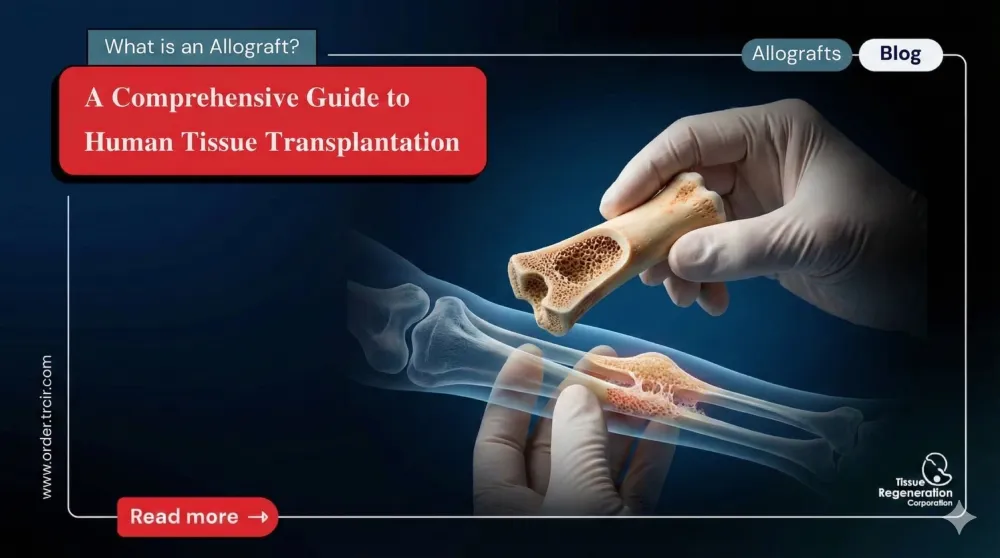
In the rapidly evolving landscape of modern medicine and surgery, the quest for the ideal material to repair, restore, and regenerate human tissue is ongoing. As surgeons, dentists, and medical suppliers operating across the globe, you are constantly faced with the decision of selecting the best grafting option for your patients. While the autograft has long been considered the “gold standard,” the limitations of donor site morbidity and availability often lead us to the next best—and often superior—solution: the allograft.
But what is an allograft exactly in the context of modern regenerative medicine? How does it compare to other modalities, and why is it becoming the cornerstone of orthopedic, neurosurgery and dental procedures? At TRC (order.trcir.com), we believe that informed choices lead to better patient outcomes. In this article, we will delve deep into the science, safety, benefits, and applications of allografts, providing you with the detailed insights needed for your clinical practice.
Understanding the Core Definition
To answer the fundamental question, what is an allograft, we must look at the etymology and clinical definition. An allograft (derived from the Greek “allos,” meaning other) is tissue transplanted from one individual to another of the same species. In our context, this means human tissue recovered from a donor (living or deceased) that is processed, sterilized, and transplanted into a recipient patient.
Unlike an autograft (tissue taken from the patient’s own body) or a xenograft (tissue derived from a different species, such as bovine or porcine), an allograft offers a unique balance. It provides a natural human scaffold that the recipient’s body recognizes as biologically compatible (once processed), without the need for a secondary surgical site to harvest tissue.
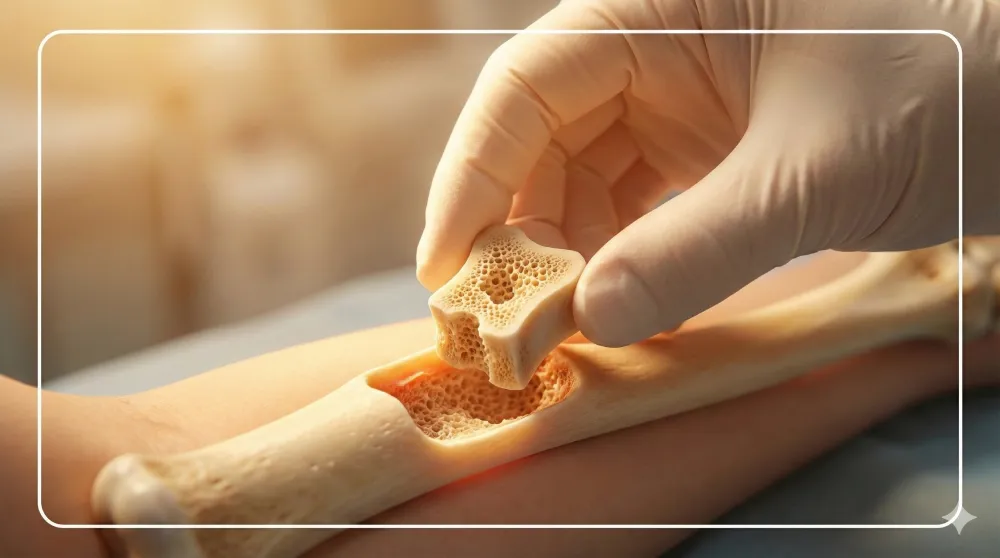
The Biological Mechanism: How Allografts Work
For a graft to be successful, particularly in bone regeneration, it must fulfill specific biological functions. Understanding these mechanisms is crucial when explaining the procedure to patients or selecting products from order.trcir.com.
Osteoconduction
Most bone allografts, such as mineralized cortical bone, serve primarily as an osteoconductive scaffold. They provide a physical matrix or 3D structure into which the host’s capillaries and perivascular tissue can grow. Think of it as a trellis for a vine; the allograft is the trellis, and the patient’s new bone is the vine.
Osteoinduction
In recent clinical studies, demineralized bone matrix (DBM) has shown promising results in stimulating osteogenesis in patients with large bone defects. A study by Baldwin et al. (2019) demonstrated that DBM significantly enhanced bone formation in orthopedic trauma surgeries. The presence of Bone Morphogenetic Proteins (BMPs) in DBM played a crucial role in this osteoinductive process, with patients showing accelerated healing and better clinical outcomes (Baldwin et al., 2019).
Some processed allografts, specifically Demineralized Bone Matrix (DBM), possess osteoinductive properties. Through the demineralization process, growth factors (like Bone Morphogenetic Proteins or BMPs) trapped within the bone matrix are exposed. These factors recruit mesenchymal stem cells to the site and differentiate them into osteoblasts, actively stimulating new bone formation.
Osteogenesis
While traditional processed allografts do not contain living cells (to prevent rejection and disease transmission), cellular allografts are a newer category containing viable stem cells. However, for most standard surgical applications, we rely on the host’s body to provide the osteogenic (bone-making) cells, while the allograft provides the roadmap and the fuel.
The Journey from Donor to Recipient: Safety and Processing
A key concern for clinicians is the safety of allografts, particularly regarding disease transmission. The risk of transmission is extremely low due to rigorous donor screening processes. For instance, a study conducted by the American Association of Tissue Banks (AATB) in 2016 reported that the risk of HIV transmission from processed allografts is less than 1 in 1.6 million. Furthermore, advanced sterilization techniques such as gamma irradiation have been shown to maintain the integrity of the tissue while eliminating pathogens, as outlined in a study by Misch (2008).
One of the primary concerns for any clinician in Europe is safety. “Is this tissue safe for my patient?” This is a valid and critical question. The journey of an allograft involves rigorous steps to ensure sterility and biocompatibility.
- Donor Screening and Recovery
The process begins with stringent donor screening. Tissue banks adhere to strict guidelines (such as those by the EATB – European Association of Tissue Banks) to exclude donors with high-risk behaviors or transmissible diseases (HIV, Hepatitis, Syphilis, etc.).
- Processing and Cleaning
Once recovered, the tissue undergoes distinct processing methods. Soft tissues (tendons, ligaments) are cleaned to remove blood and lipids. Bone tissues are often processed to remove marrow and fats, which are potential sources of immune reaction.
- Sterilization
This is the most critical step. Technologies such as Gamma irradiation, E-beam sterilization, or chemical sterilization processes (like the proprietary methods used by top-tier suppliers found on order.trcir.com) are employed to eliminate bacteria, viruses, and fungi while preserving the biomechanical integrity of the graft.
- Preservation
Finally, the allograft is preserved, typically via freeze-drying (lyophilization) or deep freezing. Freeze-dried bone has the advantage of shelf storage at room temperature, making it highly convenient for dental clinics and operating rooms.
Clinical Applications of Allografts
Allografts have a wide range of clinical applications across various medical fields. A notable example is their use in spine surgeries, where allografts are extensively used for spinal fusion. A 2007 study by Delloye et al. found that allografts used in spinal fusion demonstrated comparable outcomes to autografts, with reduced complication rates such as donor site morbidity. The study concluded that allografts are a viable and effective alternative to autografts in spine surgeries (Delloye et al., 2007).
The versatility of allografts is immense. They are not limited to a single discipline but are vital across various medical fields.
Orthopedics and Trauma
In orthopedic surgery, structural allografts are often used to replace large segments of bone lost to tumors or severe trauma. Tendons and ligaments (like the Achilles or Patellar tendon) are frequently used for ACL reconstruction in sports medicine. The advantage here is significant: the patient recovers from the knee reconstruction without the pain and weakness associated with harvesting their own hamstring or patellar tendon.
Spine Surgery
Spinal fusion is a major consumer of bone allografts. Surgeons utilize machined cortical spacers, cancellous chips, or DBM putty to facilitate fusion between vertebrae. The allograft provides the necessary stability and biological potential to fuse the spine and alleviate pain.
Dentistry and Oral Maxillofacial Surgery
For our dental colleagues, dental bone grafting is a daily procedure. Whether it is socket preservation after extraction, ridge augmentation, or a sinus lift preparation for dental implants, particulate allografts are the material of choice. They resorb at a predictable rate, turning into the patient’s own bone and creating a solid foundation for implants.
Advantages of Using Allografts
Why should a surgeon choose an allograft over an autograft or synthetic alternative?
- Reduced Operative Time: There is no need to spend time harvesting bone from the iliac crest or other sites. The allograft is ready to use off the shelf.
- No Donor Site Morbidity: This is arguably the biggest benefit. Patients do not suffer from chronic pain, infection risk, or cosmetic defects at a harvest site.
- Unlimited Supply: For large defects where the patient simply doesn’t have enough of their own bone, allografts provide unlimited volume.
- Predictability: Manufactured allografts from reputable sources like TRC come in specific sizes and shapes, allowing for precise surgical planning.

Disadvantages and Considerations
To provide a balanced view, we must also acknowledge the limitations.
- Cost: Allografts can be more expensive than autografts (which are free, biologically speaking) or simple synthetics.
- Integration Time: In some cases, allografts may take slightly longer to incorporate than fresh autologous bone.
- Immune Response: While rare due to processing (which removes cellular antigens), a mild immune response is theoretically possible, though full rejection is extremely uncommon compared to organ transplants.
Regulatory Standards in Europe
For our audience in Europe, it is important to note that the distribution of human tissue is highly regulated. The EU Tissues and Cells Directives establish the standards of quality and safety. At order.trcir.com, we prioritize partnerships with tissue banks that fully comply with these rigorous European standards, ensuring that every graft you implant is traceable, safe, and effective.
Why Choose TRC for Your Allograft Needs?
At Tissue Regeneration Corporation (TRC), we understand that as a surgeon or supplier, your reputation relies on the quality of the products you use. We are not just a provider (manufacturer); we are your partners in regenerative medicine. By sourcing high-quality allografts that undergo state-of-the-art sterilization and processing, we ensure that you can focus on what matters most: the surgery and the patient.
Whether you need cancellous bone chips for a dental void, a structural strut for a fracture, or DBM putty for a spinal case, our catalog is designed to meet the specific needs of the European medical community.
Frequently Asked Questions (FAQ)
Is an allograft safe from disease transmission?
Yes, the risk is incredibly low. Modern allografts undergo extensive donor screening, rigorous testing for infectious diseases, and advanced sterilization processes (like gamma irradiation) that render the tissue safe while maintaining its biological utility. The risk of HIV transmission, for example, is estimated to be less than 1 in 1.6 million, which is statistically lower than many other common surgical risks.
How long does an allograft last in the body?
An allograft is not intended to stay in the body as a foreign object forever. Its goal is to be incorporated. Over time (months to years), the body’s natural remodeling process (creeping substitution) replaces the graft material with the patient’s own living bone. Eventually, the allograft is fully resorbed and replaced by new, healthy host tissue.
What is the difference between Allograft and Xenograft?
What is an allograft? It is tissue from the same species (human). A Xenograft is tissue from a different species (usually cow or pig). Allografts generally remodel faster and more completely into human bone because the collagen structure is identical to the host. Xenografts are often used when volume stability is needed for a longer period, as they resorb more slowly.
Do patients need to take anti-rejection drugs for bone allografts?
No. Unlike organ transplants (kidney, heart) where living cells induce a strong immune response, processed bone and soft tissue allografts are acellular (contain no living cells) and are cleaned of blood and antigens. Therefore, the body accepts them as a scaffold without the need for immunosuppressive medication.
Can allografts be used for dental implants?
Absolutely. This is one of the most common uses. Allografts are used to preserve the jawbone after tooth extraction or to build up bone volume, creating a solid foundation for the placement of dental implants.
Conclusion
In summary, the answer to “what is an allograft” goes beyond a simple definition. It represents a bridge—a bridge between a defect and restoration, between a donor’s gift and a recipient’s recovery. Allografts have revolutionized surgery by eliminating the need for painful autograft harvesting while providing a safe, natural, and effective scaffold for regeneration.
For medical professionals in Europe, choosing the right allograft is a matter of trust and quality. We invite you to explore the extensive range of regenerative solutions available at order.trcir.com. Let us provide you with the high-quality tissues you need to deliver the excellence your patients deserve. Together, we can advance the standard of care in regenerative medicine.
References
- American Association of Tissue Banks (AATB). Standards for Tissue Banking. 14th Edition. McLean, VA: AATB; 2016.
- Baldwin, P., et al. “Autograft, Allograft, and Bone Graft Substitutes: Clinical Evidence and Indications for Use in the Setting of Orthopaedic Trauma Surgery.” Journal of Orthopaedic Trauma, vol. 33, no. 4, 2019, pp. 203-213.
- Misch, Carl E. Contemporary Implant Dentistry. 3rd Edition. Mosby Elsevier, 2008. (Focus on dental grafting materials).
- European Association of Tissue Banks (EATB). Guidelines for the preparation of microbiological safety of human tissues and cells.
- Boyne, P.J. “Animal studies of application of HTR polymer as a hard tissue replacement.” Implant Dentistry, 1993. (Comparative context for graft materials).