
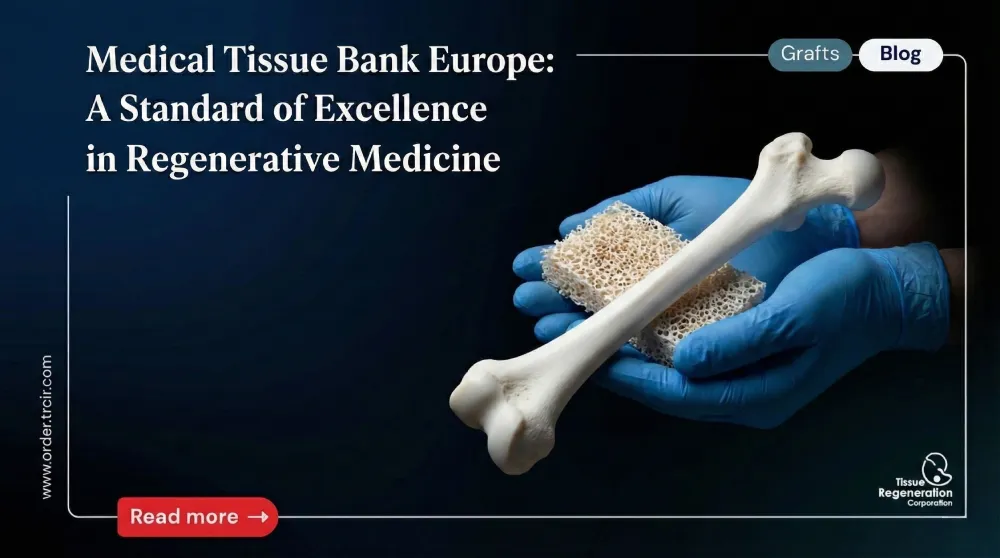
In the intricate world of modern healthcare, the availability of safe and effective biological materials is paramount. For surgeons, dentists, and clinical procurement officers across the continent, understanding the landscape of a Medical tissue bank Europe is not just about logistics—it is about ensuring patient safety and surgical success. As the demand for regenerative solutions like allografts continues to rise, the role of these institutions has never been more critical.
At TRC (order.trcir.com), we recognize that sourcing human tissue for transplantation is a decision based on trust. Whether you are a maxillofacial surgeon in Germany, an orthopedist in Italy, or a hospital supplier in France, navigating the regulations and standards of a Medical tissue bank Europe is essential. This comprehensive guide will explore the operations, safety protocols, regulatory frameworks, and clinical importance of tissue banking in the European sector, helping you make informed decisions for your practice.
The Vital Role of a Medical Tissue Bank in Europe
A Medical tissue bank Europe is a specialized medical facility responsible for the recovery, processing, storage, and distribution of human tissue for transplantation. Unlike organ donation (like hearts or kidneys), which requires immediate transplantation, tissue banking allows for the preservation of bones, skin, heart valves, tendons, and corneas for extended periods.
The primary mission of these banks is to transform a generous gift from a donor into a life-enhancing medical device. In Europe, this process is governed by some of the strictest standards in the world. When a clinician selects a bone graft or a soft tissue implant, they are relying on a complex chain of custody that ensures the graft is free from disease and biomechanically sound.
The Lifecycle of a Graft
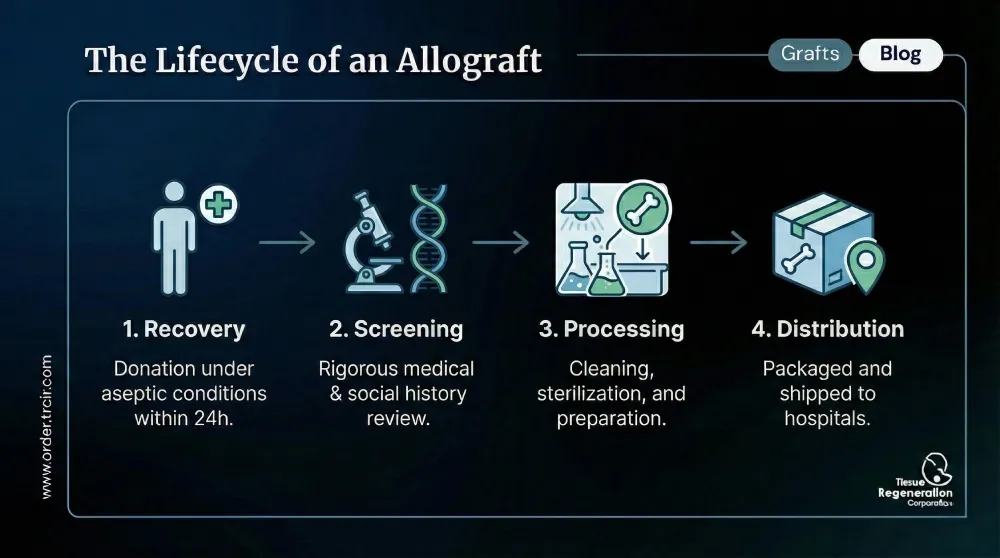
The journey of an allograft within the European framework involves several meticulous steps:
- Recovery: Tissue is recovered from deceased donors under aseptic conditions, typically within 24 hours of death regarding the cold and warm ischemic time of the tissue.
- Screening: A rigorous review of the donor’s medical and social history is conducted to rule out high-risk behaviors or transmissible diseases.
- Processing: The tissue is cleaned, cut, and treated (often using chemical washes or irradiation) to remove blood, lipids, antigens and potential pathogens.
- Distribution: The final product is packaged and shipped to hospitals and clinics.
Regulatory Standards: The European Framework
One of the defining characteristics of a Medical tissue bank Europe is adherence to rigorous regulatory directives. Unlike some other regions where regulations may be fragmented, the European Union has established a cohesive legal framework to ensure quality and safety.
The EU Tissues and Cells Directives
The core of European tissue banking is built upon the EU Tissues and Cells Directives (EUTCD), specifically Directive 2004/23/EC. This legislation sets the standards of quality and safety for the donation, procurement, testing, processing, preservation, storage, and distribution of human tissues and cells.
For a medical professional, this means that any allograft circulated within the EU must come from a certified source. At order.trcir.com, we ensure that our supply chain strictly adheres to these high benchmarks. Whether the tissue is sourced locally or imported, it must meet the “equivalence” of EU standards. This ensures that a dental bone graft used in Madrid meets the same safety criteria as one used in Berlin.
The Role of the EATB
The European Association of Tissue Banks (EATB) plays a significant role in harmonizing these standards. They provide scientific guidelines that often go beyond the basic legal requirements, promoting best practices in tissue banking. When searching for a partner in regenerative medicine, looking for alignment with EATB guidelines is a mark of quality.
Clinical Applications: Why Quality Matters
The products supplied by a high-caliber Medical tissue bank Europe are essential for a wide array of surgical disciplines. The quality of the processing directly impacts the clinical outcome.
Dentistry and Oral Surgery
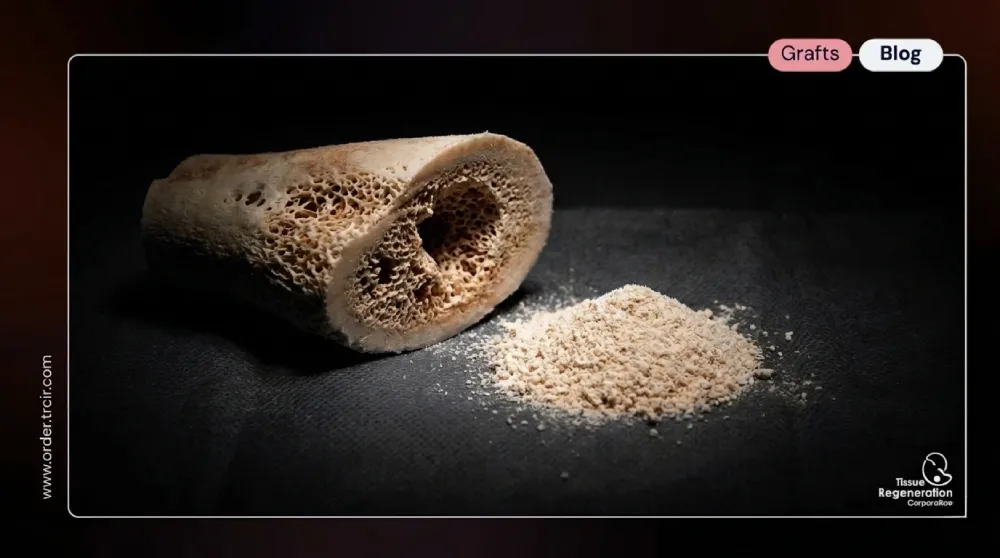
In the field of implant dentistry, the demand for bone regeneration materials is immense. A Medical tissue bank Europe provides mineralized cortical powder and cancellous chips that are crucial for socket preservation and sinus lifts. High-quality processing ensures that these grafts retain their osteoconductive structure, allowing the patient’s body to remodel the graft into living bone efficiently.
Orthopedics, Neurosurgery and Trauma
For orthopedic surgeons, the availability of structural grafts is vital. Large segmental defects caused by tumors or trauma often require massive allografts. Furthermore, demineralized bone matrix (DBM), which retains osteoinductive growth factors, is a staple in spinal fusion surgeries. A reliable tissue bank ensures that these products have verified osteoinductivity, meaning they actively stimulate bone growth.
Sports Medicine
Soft tissue allografts, such as the Achilles tendon or Tibialis tendon, are frequently used to reconstruct torn ligaments (like the ACL). The biomechanical strength of these grafts is critical. If a Medical tissue bank Europe uses harsh sterilization techniques that damage the collagen structure, the graft may fail. Therefore, choosing a supplier that utilizes advanced, tissue-sparing sterilization technologies is non-negotiable.
Safety Protocols: The Pillars of Trust
When we discuss a Medical tissue bank Europe, safety is the conversation’s centerpiece. How do we ensure that a biological product is safe for implantation?
Serological and Microbiological Testing
Every donor undergoes extensive blood testing for infectious diseases, including HIV-1/2, Hepatitis B and C, Syphilis, and HTLV. Advanced Nucleic Acid Testing (NAT) is standard practice to detect viruses during their “window period” when antibodies might not yet be present.
Sterilization Technologies
Modern tissue banks employ sophisticated sterilization methods. Gamma irradiation and E-beam sterilization are common, but they must be dosed precisely to kill pathogens without destroying the graft’s utility. Some premier facilities utilize proprietary chemical sterilization processes (like the BioCleanse or similar methodologies) that allow the tissue to remain sterile while preserving its natural biomechanical properties.
Traceability
A fundamental requirement for any Medical tissue bank Europe is traceability. Every graft must be traceable from the recipient back to the donor and vice versa. This bi-directional tracking system ensures that in the extremely rare event of a recall or safety alert, all affected tissues can be identified immediately.
The Challenge of Supply and Demand
Europe faces a unique challenge: the demand for human tissue often outstrips the local supply. While donation rates vary across countries, the need for specialized grafts, particularly for dental implants and complex orthopedic procedures, is growing rapidly.
This is where international cooperation and specialized distributors like TRC bridge the gap. By connecting European clinicians with top-tier global tissue processors that meet European regulatory standards, we ensure a consistent supply of high-quality allografts. We understand that a surgery cannot wait; having a reliable partner who understands the logistics of a Medical tissue bank Europe is a strategic asset for any clinic.
Ethical Considerations in Tissue Banking
The foundation of the entire system is the altruistic gift of the donor. In Europe, tissue donation is based on voluntary, non-remunerated donation. A reputable Medical tissue bank Europe operates with the highest ethical standards, ensuring dignity and respect for the donor and their family.
When you purchase a graft from order.trcir.com, you are participating in an ethical chain of custody. We prioritize working with partners who maintain transparent consent protocols and honor the gift of donation by ensuring the tissue is processed and utilized with the utmost respect and efficiency to maximize the benefit to patients.
Selecting the Right Partner
With various suppliers in the market, how does a clinician choose? The ideal partner is not just a vendor but a knowledgeable resource.
- Compliance: Ensure the supplier provides documentation verifying compliance with EU Directives.
- Portfolio: Look for a wide range of products, from particulate bone for dentistry to structural shafts for orthopedics.
- Support: A good supplier offers technical data, handling instructions, and reliable customer service.
- Logistics: Efficient cold-chain logistics are crucial to ensure the tissue arrives in optimal condition.
Frequently Asked Questions (FAQ)
What regulations govern a Medical tissue bank Europe?
The primary regulations are the EU Tissues and Cells Directives (2004/23/EC) and its technical directives. These laws set the mandatory standards for safety and quality across all EU member states. Additionally, individual countries may have their own competent authorities (like the HTA in the UK or the Paul-Ehrlich-Institut in Germany) that enforce these rules.
Can allografts from outside Europe be used in EU hospitals?
Yes, provided they meet the specific import requirements. Tissues imported into the EU must come from tissue banks that have been inspected and accredited to standards “equivalent” to those in the EU. This allows European doctors access to a wider inventory of high-quality grafts from trusted global partners.
How safe is tissue from a Medical tissue bank Europe compared to autografts?
While autografts (patient’s own bone) carry zero disease transmission risk, they come with high risks of donor site pain, infection, and limited quantity. Tissue from a certified Medical tissue bank Europe carries a negligible risk of disease transmission (estimated at less than 1 in 1.6 million for HIV) due to modern screening and sterilization, making it a safe and highly effective alternative without the morbidity of a second surgical site.
What is the difference between fresh-frozen and freeze-dried bone?
Fresh-frozen bone is stored at extremely low temperatures (-40°C to -80°C) to preserve its biomechanical strength and is often used for structural support. Freeze-dried (lyophilized) bone has had the water removed, allowing it to be stored at room temperature (shelf-stable). Freeze-dried bone is very popular in dentistry for convenience, while fresh-frozen is common in orthopedics.
Does a Medical tissue bank Europe supply living stem cells?
Most standard allografts (bone chips, struts) are processed to be acellular to prevent rejection. However, advanced cellular allografts are available that contain viable mesenchymal stem cells derived from bone marrow. These are handled differently, usually requiring cryopreservation, and are used when osteogenic (bone-growing) potential is required in the graft itself.
Conclusion
The landscape of the Medical tissue bank Europe is one of rigor, science, and ethics. For the European medical community, these institutions are the silent engines powering thousands of successful surgeries every day. From restoring mobility in a young athlete to rebuilding the jaw of a dental patient, the impact of high-quality allografts is profound.
At TRC, we are committed to being your gateway to this world of excellence. By upholding the stringent standards expected in Europe and providing a diverse portfolio of regenerative medicine solutions, we empower you to operate with confidence. We invite you to explore our catalog at order.trcir.com and discover how our commitment to quality can enhance your clinical outcomes. Trust, safety, and innovation—these are the hallmarks of a leading Medical tissue bank Europe, and they are the values we deliver to you.
References
- European Parliament and Council. Directive 2004/23/EC on setting standards of quality and safety for the donation, procurement, testing, processing, preservation, storage and distribution of human tissues and cells. Official Journal of the European Union, 2004.
- European Association of Tissue Banks (EATB). EATB Guidelines for the use of Human Tissues and Cells.
- Eastlund, T. “Bacterial infection transmitted by human tissue allografts: current incidence and clinical significance.” Cell and Tissue Banking, 2006.
- Delloye, C., et al. “Bone allografts: What they can offer and what they cannot.” Journal of Bone and Joint Surgery (British Volume), 2007.
- World Health Organization (WHO). Global consultation on regulatory requirements for human tissue and cell products.