
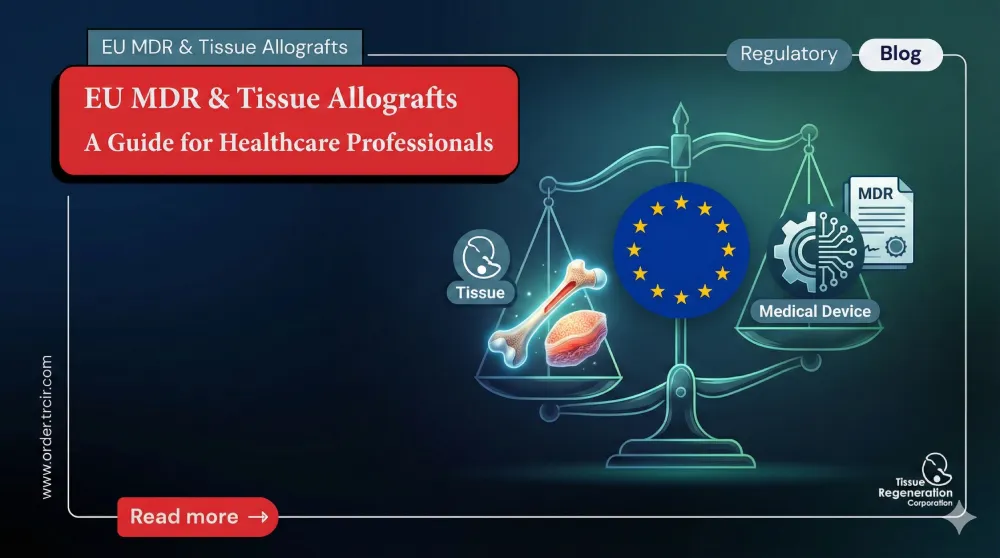
In the rapidly evolving world of modern medicine, the regulatory landscape is shifting beneath our feet. For surgeons, hospital procurement managers, and clinic administrators operating within the European Union, keeping up with these changes isn’t just about compliance—it is about ensuring patient safety and maintaining access to life-saving treatments.
One of the most significant shifts in recent years has been the introduction of the EU Medical Device Regulation (MDR). While this regulation primarily targets medical devices, its ripples are felt across the entire healthcare spectrum, including the sector of Human Tissue Allografts. You might be wondering, “Does the MDR apply to the bone graft or soft tissue I use in surgery?” or “How does this affect my supply chain?”
At TRC (http://order.trcir.com/), we understand that navigating these complex regulations can be daunting. As a leader in the reproduction of human tissues and a reliable partner for medical professionals, we believe in transparency and education. In this article, we will explore what the EU MDR means for tissue allografts, clarify the distinction between a “tissue product” and a “medical device,” and discuss how these regulations impact the quality and safety of the grafts you rely on daily.
If you are looking to understand the future of tissue availability in Europe and how to ensure your clinic remains compliant, we invite you to stay with us through this deep dive.
Understanding the Regulatory Landscape: MDR vs. EU Tissues and Cells Directive (EUTCD)
Before we analyze the impact, we must first establish the ground rules. In the European Union, human tissues and cells have traditionally been regulated under a specific framework known as the EU Tissues and Cells Directive (EUTCD) (Directive 2004/23/EC). This directive sets the standards of quality and safety for the donation, procurement, testing, processing, preservation, storage, and distribution of human tissues and cells.
However, the introduction of the Medical Device Regulation (Regulation (EU) 2017/745), which fully applied starting May 2021, has created a new layer of scrutiny. The MDR replaces the old Medical Device Directive (MDD) and imposes much stricter requirements on clinical evidence, traceability, and post-market surveillance.
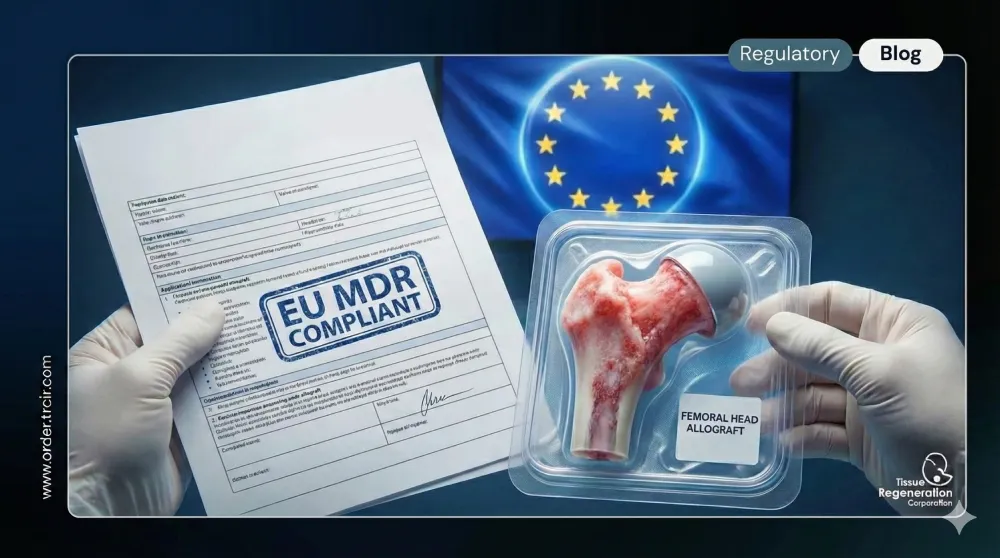
The Crucial Distinction
So, where do Human Tissue Allografts fit in? The answer lies in the definitions of “manipulation” and “intended use.”
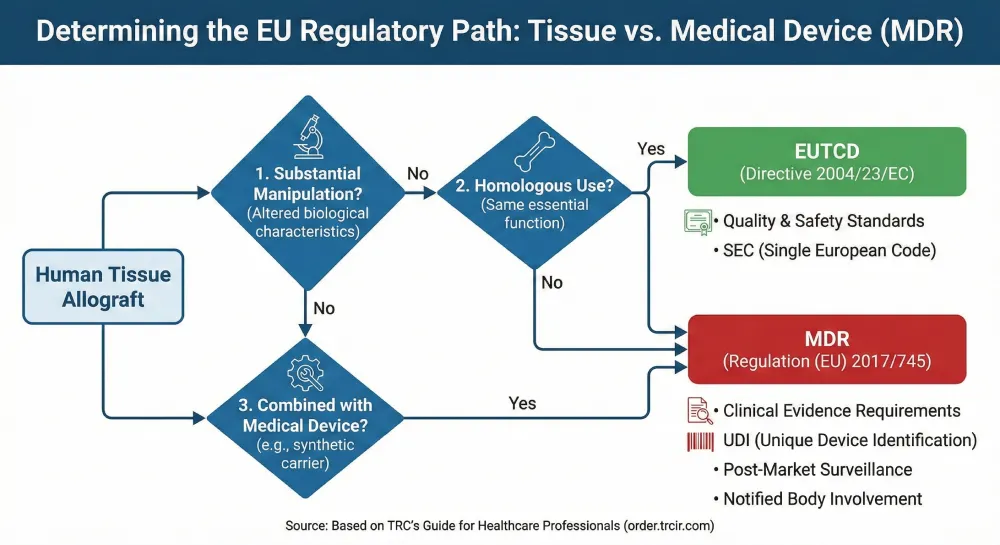
Generally, if a human tissue allograft is minimally manipulated (meaning its biological characteristics are not altered) and is used for the same essential function in the recipient as in the donor (homologous use), it remains regulated under the EUTCD.
However, the EU MDR for Tissue Allografts becomes relevant when:
- The tissue has been processed in a way that alters its biological characteristics (substantial manipulation).
- The tissue is used for a function different from its original purpose (non-homologous use).
- The tissue is combined with a medical device (e.g., a bone graft mixed with a synthetic carrier).
Understanding this borderline is essential for TRC and our partners in hospitals. It determines the level of clinical data required and the certification process the product must undergo.
Why the MDR Matters Even for Traditional Allografts
You might be thinking, “If standard allografts are under the Tissue Directive, why should I care about the MDR?” This is a valid question. Even if the specific product you are using is technically regulated as a tissue and not a device, the EU MDR for Tissue Allografts has created a “halo effect” on the entire industry.
Here is why the MDR matters to you as a healthcare provider:
- Elevated Standards of Clinical Evidence
The MDR places a massive emphasis on clinical data. It is no longer enough to say a product works; manufacturers must prove it with robust clinical investigations. This cultural shift is influencing the tissue banking sector as well. Regulators and notified bodies are increasingly expecting higher levels of clinical data for all biological implants, regardless of their regulatory classification.
When you source products from a reputable provider like http://order.trcir.com/, you are looking for that assurance of efficacy. The pressure from the MDR means that top-tier tissue banks are investing more in validating their processing methods to match these elevated industry standards.
- The Borderline Products Challenge
Many innovative products in regenerative medicine sit on the fence between a tissue and a device. For example, a demineralized bone matrix (DBM) combined with a synthetic carrier to improve handling might be classified as a medical device containing a human blood or tissue derivative.
Under the MDR, these products face:
- Stricter Conformity Assessments: Involvement of Notified Bodies is mandatory.
- Reclassification: Some products previously considered Class II might move to Class III (highest risk), requiring more rigorous scrutiny.
- Supply Chain Disruption: Some manufacturers may withdraw products from the market if they cannot meet the expensive and time-consuming MDR requirements.
- Traceability and Unique Device Identification (UDI) vs. Single European Code (SEC)
The MDR mandates the use of a Unique Device Identification (UDI) system for medical devices to ensure traceability throughout the supply chain. Similarly, the tissue world uses the Single European Code (SEC).
For hospitals, this means your inventory management systems must be capable of handling these rigorous tracking codes. Whether it is a device or a tissue, the era of “implant and forget” is over. The EU MDR for Tissue Allografts context implies that hospitals need seamless systems to track every graft from the supplier to the patient, ensuring rapid action in case of recalls or adverse events.
The Impact on Hospital Procurement and Doctors
For the end-users—the surgeons and procurement officers—the implications of the MDR are practical and daily. It affects availability, cost, and administrative workload.
Ensuring Continuity of Care
With the stricter rules of the EU MDR for Tissue Allografts and related devices, some smaller suppliers are exiting the market because they cannot afford the compliance costs. This consolidation poses a risk to the availability of certain niche grafts. At TRC, we are committed to maintaining a robust supply chain. We understand that when a patient is on the operating table, availability is not just a logistic metric; it is a clinical necessity.
The Need for rigorously Validated Suppliers
As a doctor, you rely on the safety of the Human Tissue Allografts you implant. The regulatory environment is pushing hospitals to vet their suppliers more thoroughly. You need to ask:
- Does my supplier understand the regulatory status of their products?
- Do they have data supporting the safety and performance of their grafts?
- Are they compliant with European standards?
Working with a specialized partner like http://order.trcir.com/ ensures that you are backed by a team that prioritizes regulatory compliance and quality assurance, safeguarding your practice against compliance risks.
Quality Management Systems (QMS): The Backbone of Compliance
Whether governed by the MDR or the EUTCD, the heart of compliance is the Quality Management System. The MDR has upgraded the requirements for QMS, specifically regarding:
- Risk Management: Proactive analysis of potential failure modes.
- Post-Market Surveillance (PMS): Actively gathering data on product performance after it has been sold.
For tissue banks and processors, adopting these MDR-style QMS principles is becoming a best practice. It means that when you receive a graft, it has been subjected to a risk-based approach similar to high-risk medical devices. This convergence of standards is ultimately a win for patient safety, even if it increases the complexity for manufacturers.
The Future of Regenerative Medicine in Europe
The EU MDR for Tissue Allografts creates a challenging environment, but it also fosters innovation rooted in safety. We are moving towards a future where the distinction between “biological” and “synthetic” becomes less about the material and more about the clinical evidence supporting it.
For TRC, this is an opportunity. By adhering to the highest standards of production and validation, we aim to bridge the gap for European clinics. We are constantly monitoring the regulatory updates from the European Commission and the Competent Authorities to ensure that our Human Tissue Allografts meet the expectations of modern European medicine.
Common Challenges You Might Face
Transitioning to this new regulatory era is not without its hurdles. Here are some challenges that hospitals and clinics might face:
- Cost Increases: The cost of compliance (clinical trials, notified body fees, new QMS software) is often passed down the supply chain.
- Administrative Burden: Hospitals need more staff to handle the documentation required for diverse types of implants.
- Confusion on Classification: Determining if a novel wound care product is a device or a tissue can be confusing for purchasing departments.
However, these challenges can be mitigated by choosing the right partners who provide clear documentation and support.
Frequently Asked Questions (FAQ)
To help you further understand the EU MDR for Tissue Allografts, we have compiled a list of common questions we receive from medical professionals.
Is every bone graft considered a medical device under the MDR?
No. Traditional bone grafts that are minimally manipulated (e.g., cleaned, sterilized, freeze-dried) and used for the same function (homologous use) are regulated under the EU Tissues and Cells Directive (EUTCD), not the MDR. However, if the bone is processed to change its biological structure or combined with other substances, it may be classified as a medical device.
How does the MDR affect the availability of products I use?
The MDR imposes stricter clinical evidence requirements and conformity assessments. This has led to a backlog with Notified Bodies and increased costs for manufacturers. Consequently, some manufacturers have discontinued older or niche products that were not profitable enough to recertify. It is crucial to have reliable suppliers like TRC to ensure consistent access to necessary grafts.
What is the difference between the Single European Code (SEC) and UDI?
The SEC is a unique identifier required for tissues and cells distributed in the EU (under the EUTCD) to ensure traceability from donation to application. The UDI (Unique Device Identification) is the equivalent system for medical devices under the MDR. Both serve the purpose of traceability, but they operate under different legal frameworks.
Do I need to change my hospital’s procurement process?
Likely, yes. You should update your supplier qualification procedures to ensure all vendors comply with the relevant regulations (MDR for devices, EUTCD for tissues). You may also need to update your inventory systems to scan and track both UDI and SEC codes efficiently.
Why is TRC a safe choice for European clinics?
At http://order.trcir.com/, we specialize in high-quality Human Tissue Allografts. We stay ahead of regulatory curves, ensuring that our processing, testing, and distribution methods meet the stringent safety and quality standards expected in the European market. We prioritize transparency and clinical efficacy.
Conclusion
The introduction of the EU Medical Device Regulation (MDR) represents a seismic shift in European healthcare. While its primary focus is on devices, its influence extends deep into the world of Human Tissue Allografts. The lines between tissues and devices are becoming thinner, and the demand for clinical evidence, traceability, and patient safety is higher than ever before.
For doctors and hospital administrators, the key to navigating this landscape is knowledge and partnership. Understanding the EU MDR for Tissue Allografts allows you to make informed decisions, ensuring that your patients receive the safest, most effective treatments available.
At TRC, we are more than just a supplier; we are your partner in this new era of regenerative medicine. We are dedicated to providing products that not only meet regulatory standards but also exceed your clinical expectations.
If you are looking for a reliable source of high-quality tissue allografts or need assistance understanding the best solutions for your clinic, we are here to help.
Visit us at http://order.trcir.com/ to explore our portfolio and secure your supply chain today.