
The management of severe burns remains one of the most complex challenges in modern trauma surgery. For surgeons and burn specialists, the goal is never just survival; it is the restoration of function, the minimization of disfiguring scars, and the return of the patient to a dignified life.
In the past, the “gold standard” of autologous split-thickness skin grafting (STSG) often came with a heavy price: severe scar contractures, limited range of motion, and poor cosmetic outcomes, especially in extensive burns where donor sites are scarce. However, the landscape of reconstructive surgery is shifting.
At TRC (http://order.trcir.com/), we have observed a significant rise in the adoption of Acellular Dermal Matrices (ADMs) across European burn centers. But does the data back the trend? How does this biotechnology perform in real-world scenarios?
In this article, we will explore a detailed clinical analysis of ADM for Severe Burn Treatment, examining a representative case study that highlights the physiological benefits, surgical application, and long-term outcomes of using these advanced scaffolds. If you are a healthcare provider or a hospital procurement manager looking to optimize your burn care protocols, this deep dive is for you.
Understanding the Role of the Dermis in Burn Repair
To appreciate the value of ADM for Severe Burn Treatment, we must first revisit the pathology of a deep burn. When a full-thickness burn occurs, the entire dermis is destroyed. Standard skin grafts (STSG) replace the epidermis but typically include only a fraction of the dermis.
The lack of a substantial dermal layer is the primary culprit behind hypertrophic scarring. The dermis provides elasticity, pliability, and mechanical strength. Without it, the wound heals by contraction, leading to the stiff, unyielding scars that plague burn survivors.
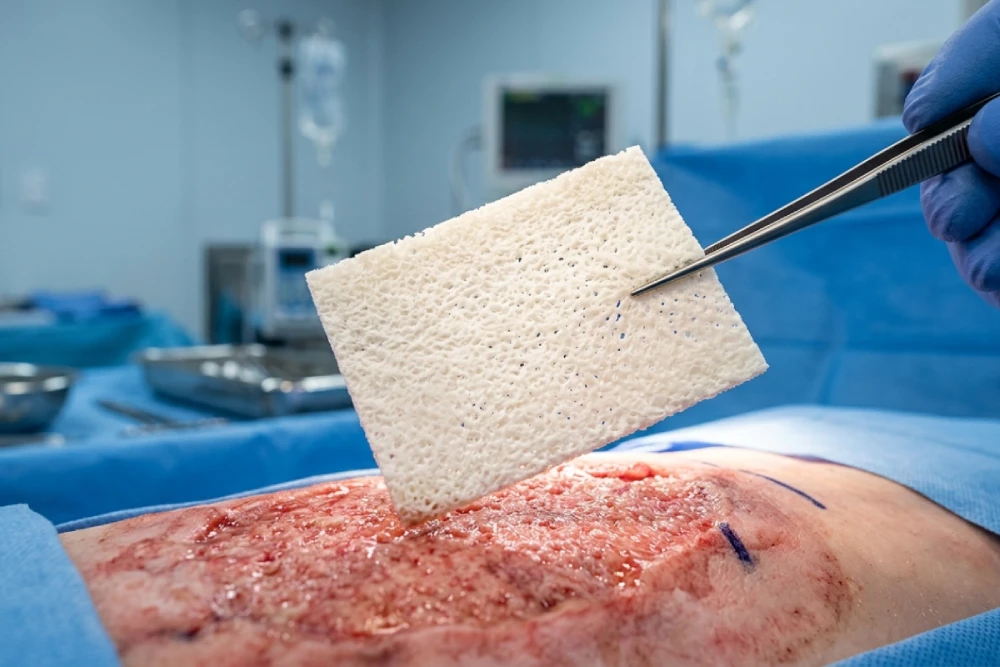
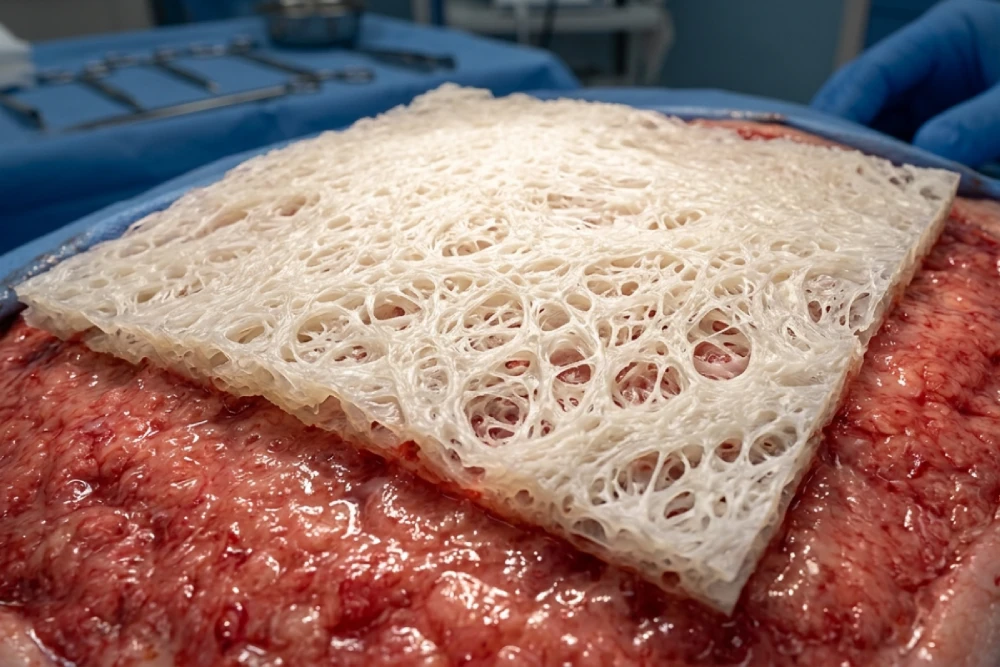
This is where Human Tissue Allografts and specifically Acellular Dermal Matrices come into play. An ADM is essentially a biological scaffold—human or animal skin tissue that has been decellularized to remove antigenicity while preserving the extracellular matrix structure. It acts as a template for the patient’s own cells to repopulate, effectively regenerating a “neodermis” rather than scar tissue.
Case Study: Reconstructing Function in a 40% Total Body Surface Area (TBSA) Burn
Let us look at a representative case based on aggregate clinical data from recent dermatological surgery studies. This scenario illustrates the typical challenges faced in burn units and how ADM for Severe Burn Treatment changes the trajectory of recovery.
Patient Profile
- Subject: 34-year-old male.
- Mechanism of Injury: Industrial thermal injury (chemical plant explosion).
- Diagnosis: Full-thickness and deep partial-thickness burns covering 40% of the Total Body Surface Area (TBSA).
- Critical Areas Involved: Bilateral hands (dorsal aspect), neck, and anterior chest.
The Clinical Challenge
The involvement of the neck and hands presented an immediate functional risk. Standard grafting in these high-mobility areas often results in severe contractures. A “mentosternal contracture” (where the chin is pulled down to the chest) or “claw hand” deformity would permanently disable the patient. Furthermore, given the large TBSA, healthy donor sites for autografts were limited.
Surgical Intervention Strategy
The surgical team opted for a two-stage reconstruction using a human-derived ADM to ensure optimal functional recovery.
Stage 1: Debridement and Scaffold Placement
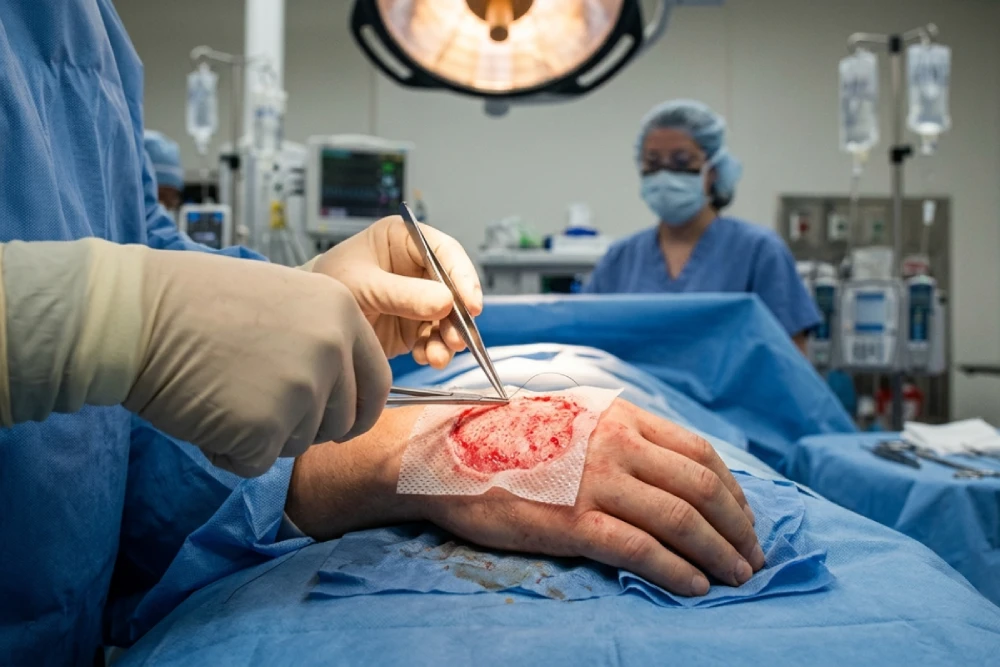
Within 72 hours of admission, the patient underwent tangential excision to remove all necrotic tissue until viable, bleeding wound beds were achieved.
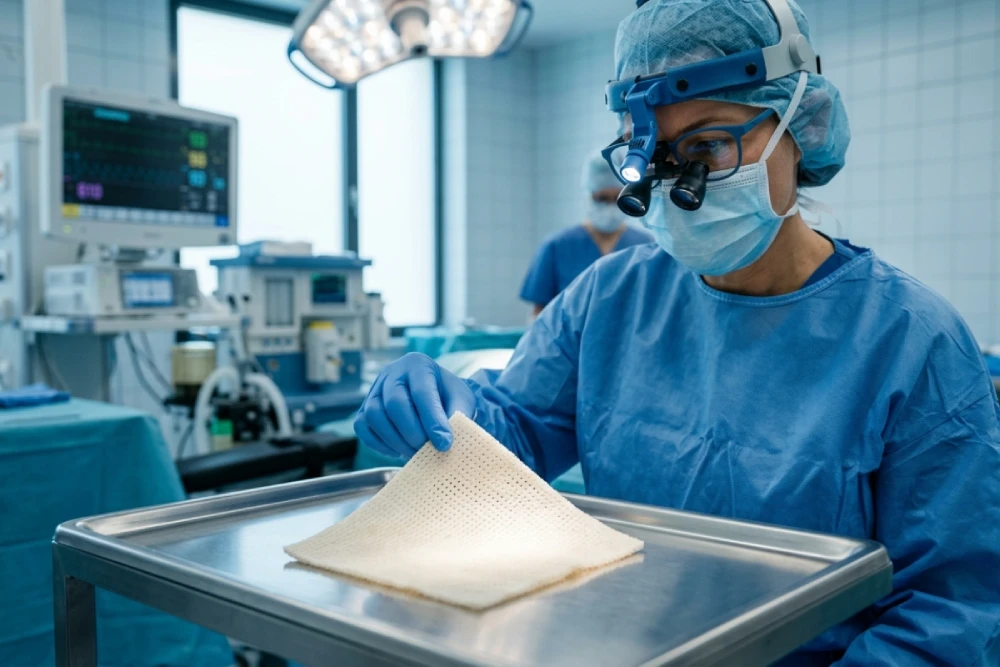
Instead of immediately applying a thin autograft, the surgeons applied an Acellular Dermal Matrix. The ADM was secured with sutures and covered with a negative pressure wound therapy (NPWT) device.
- Why NPWT? It helps secure the ADM to the wound bed, prevents shearing, and promotes rapid vascularization (angiogenesis).
Stage 2: Autografting
Three weeks later, the ADM had successfully integrated. It appeared vascularized, showing a healthy “peach” color. At this stage, a thin split-thickness skin graft (STSG) was harvested from the patient’s limited donor sites and placed over the vascularized ADM.
Clinical Outcomes
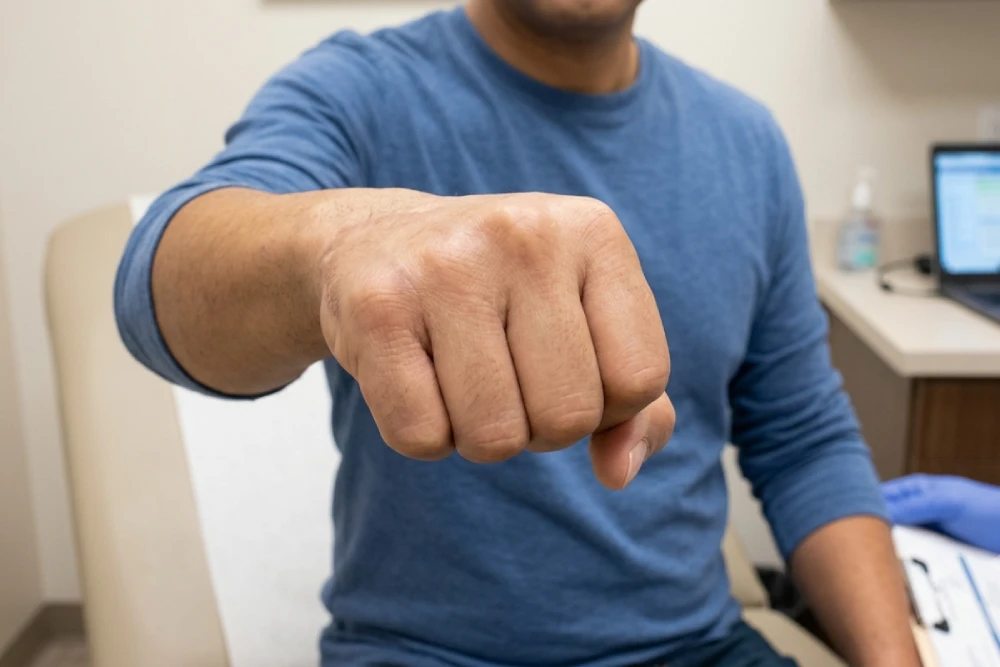
- 6 Months Post-Op: The patient showed minimal hypertrophic scarring. The skin on the dorsal hands remained pliable, allowing for full fist closure and extension.
- 12 Months Post-Op: The neck range of motion was near normal. The “neodermis” created by the ADM provided enough thickness and elasticity to prevent the dreaded contractures often seen in neck burns.
- Donor Site Morbidity: Because the ADM provided the dermal bulk, the surgeons could use thinner autografts, allowing the donor sites to heal faster and be re-harvested if necessary.
Why ADM for Severe Burn Treatment Works
The success seen in the case above is not accidental; it is physiological. When we utilize ADM for Severe Burn Treatment, we are essentially tricking the body into regenerating rather than repairing.
- Scaffold for Ingrowth: The porous structure of the ADM allows fibroblasts and endothelial cells to migrate into the matrix.
- Modulation of Inflammation: Research suggests that the matrix helps modulate the wound healing response, reducing the overactivity of myofibroblasts (the cells responsible for pulling a wound shut and causing contracture).
- Elasticity Retention: By restoring the dermal component, the reconstructed skin retains the viscoelastic properties of native skin, which is crucial for joints and the face.
Addressing the Supply and Regulatory aspect
For hospital administrators and surgeons in Europe, the clinical efficacy is clear, but the logistics can be complex. Sourcing high-quality Human Tissue Allografts requires navigating a strict regulatory environment.
As we discussed in our previous analysis of the EU MDR for Tissue Allografts, ensuring that your ADM provider is compliant with European regulations is non-negotiable. The MDR and the EU Tissues and Cells Directive ensure that the grafts you receive are safe, traceable, and processed under validated conditions.
At TRC, we prioritize this compliance. We understand that when you are treating a 40% TBSA burn, you cannot afford to worry about the safety profile of your graft. You need a product that integrates reliably. Our commitment to quality ensures that the ADMs we supply maintain their structural integrity and biological compatibility, making them a dependable choice for Severe Burn Treatment.
Comparative Analysis: ADM vs. Standard of Care
To make an informed decision, it is helpful to compare the use of ADM for Severe Burn Treatment against traditional methods.
| Feature | Standard STSG (Skin Graft Only) | STSG + Acellular Dermal Matrix (ADM) |
| Dermal Thickness | Low (depends on harvest depth) | High (restored by matrix) |
| Scar Quality | High risk of hypertrophy | Reduced scarring, better texture |
| Contracture Risk | High, especially in joints | Significantly lower |
| Cosmetic Outcome | Often mesh pattern visible | Smoother, more natural appearance |
| Cost | Lower upfront cost | Higher material cost, but lower long-term revision costs |
| Healing Time | One stage (usually) | Often requires two stages (depending on product) |
While the upfront cost of ADM is higher, studies have shown that it significantly reduces the need for secondary reconstructive surgeries (such as z-plasties for contracture release). Therefore, the long-term cost-effectiveness of ADM for Severe Burn Treatment is often superior for the healthcare system.
Key Considerations for Surgeons
When incorporating ADM into your practice, consider the following:
- Infection Control: ADMs are avascular upon application. A pristine, uninfected wound bed is mandatory. Any bacterial load can lead to the “melting” of the graft.
- Immobilization: The matrix needs stability to vascularize. Shearing forces are the enemy of integration.
- Product Selection: Not all ADMs are the same. Some are cross-linked (more durable but slower vascularization), and some are non-cross-linked (faster integration). Choosing the right type depends on the specific site of the burn.
Frequently Asked Questions (FAQ)
To further assist our medical partners, here are answers to common questions regarding the use of these matrices.
What is the primary indication for using ADM in burns?
ADM for Severe Burn Treatment is primarily indicated for deep dermal or full-thickness burns, particularly in functional areas (hands, feet, neck, axilla) where skin elasticity is critical to prevent contracture. It is also used when exposed bone or tendon requires a robust vascular bed before grafting.
Can ADM be used in a single-stage procedure?
Yes, depending on the type of ADM and the condition of the wound bed. Some thin, meshed ADMs allow for the simultaneous application of a split-thickness skin graft (STSG) in a “one-stage” procedure. However, for thicker matrices used in high-stress areas, a two-stage approach allows for better vascularization before the autograft is applied.
Does the use of ADM eliminate the need for autografts?
No. An ADM replaces the dermis (the lower layer), but it does not contain living epidermal cells. You still need to cover the ADM with the patient’s own epithelium, usually via a thin STSG or cultured epithelial autografts (CEA).
How does TRC ensure the safety of its ADM products?
Safety is our core pillar. Our Human Tissue Allografts undergo rigorous screening, testing, and sterilization processes validated against international standards. We ensure full traceability and compliance with relevant regulations, giving surgeons peace of mind during critical procedures.
Is ADM suitable for infected burn wounds?
Generally, no. ADMs act as a foreign body until vascularized. Placing an ADM on an infected wound significantly increases the risk of graft failure. Infection must be cleared via debridement and antibiotics before matrix application.
Conclusion: A New Standard for Quality of Life
The shift towards using ADM for Severe Burn Treatment marks a turning point in reconstructive surgery. We are moving away from merely closing the wound to truly reconstructing the skin.
For the patient in our case study, the use of ADM meant the difference between a life of restricted movement and a return to his career and daily activities. For the surgeon, it offered a reliable tool to solve the problem of donor site shortage and scar contracture.
At TRC, we are proud to support the medical community with high-quality regenerative solutions. Whether you are in a trauma center in Berlin, a burn unit in Paris, or a clinic in Rome, accessing top-tier tissue allografts should be seamless.
We invite you to explore how our products can enhance your surgical outcomes.
Visit http://order.trcir.com/ to learn more about our portfolio of tissue allografts and how we can support your clinic’s needs.
References:
- Orgill, D. P., & Ogawa, R. (2013). Acellular dermal matrix in reconstruction of extensive burn scars. Clinics in Plastic Surgery, 40(3).
- Philandrianos, C., et al. (2020). The use of artificial dermal templates in the treatment of deep burns. Burns & Trauma.
- Wong, T., et al. (2018). The use of Matriderm in early excision and simultaneous grafting of full-thickness burns: a pilot study. Burns.
- European Burns Association (EBA) Guidelines for Burn Care Standards.