
The rising costs of healthcare have placed significant pressure on surgical centers and hospitals to find cost-effective solutions without compromising patient safety or clinical outcomes. In the realm of orthopedic and reconstructive surgery, the demand for affordable human allograft tissue has never been higher. For surgeons, hospital procurement officers, and clinical suppliers partnering with TRC (Tissue Regeneration Corporation), navigating the market for high-quality yet economical biological materials is essential for maintaining a sustainable practice.
While autografts have long been the traditional choice, the hidden costs associated with donor-site morbidity—such as prolonged operative time, increased risk of infection at the harvest site, and extended rehabilitation—often make them more expensive in the long run. Transitioning to specialized allografts is not just a clinical upgrade; it is a strategic financial move that benefits both the provider and the patient.
The Economic Shift Toward Allografts
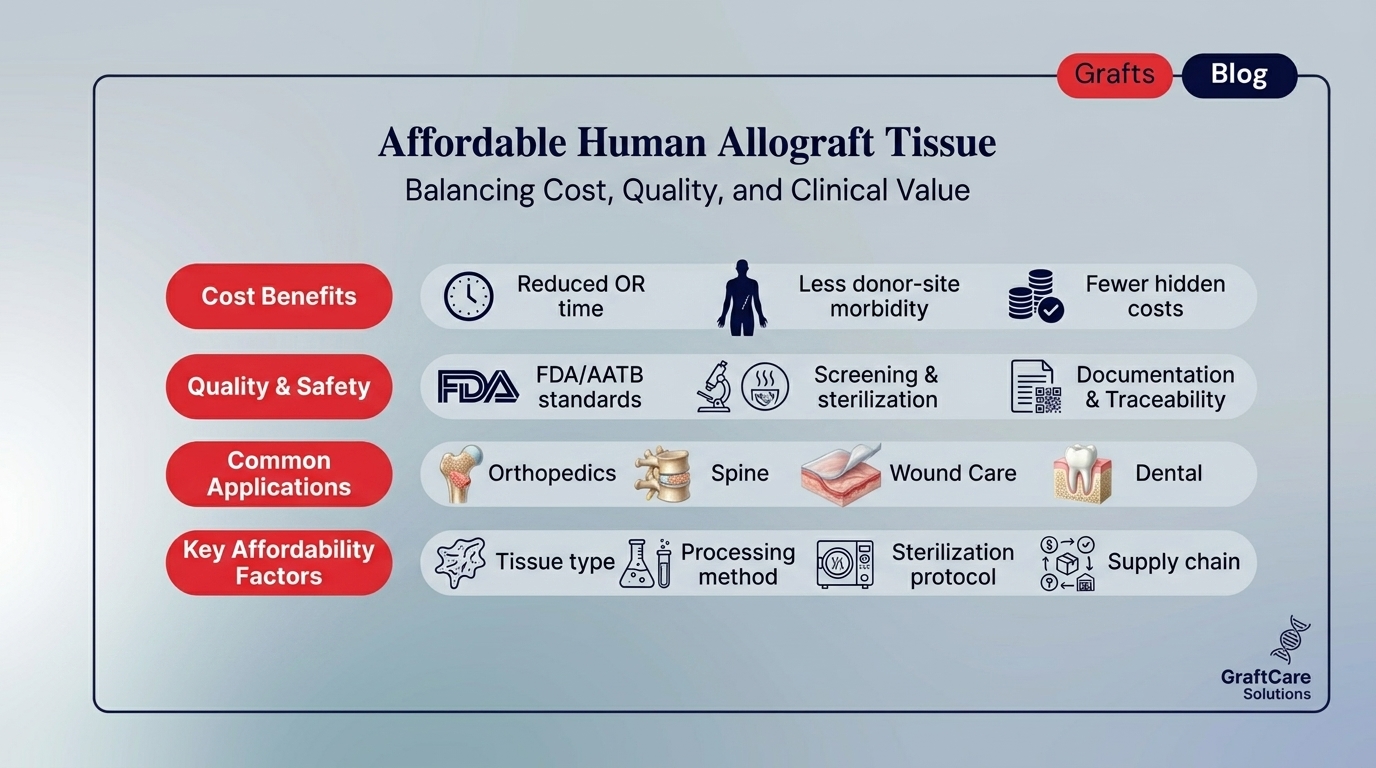
In a value-based healthcare environment, the efficiency of the operating room is a primary metric. Using affordable human allograft tissue allows surgeons to eliminate the time-consuming process of harvesting autogenous bone or tendon. This reduction in “skin-to-skin” time translates into lower anesthesia costs and the ability to perform more procedures in a single day.
Furthermore, by sourcing tissues from a reliable partner like TRC, facilities can reduce their inventory overhead. Instead of relying on unpredictable autograft quality, clinicians receive standardized, high-performance grafts that are ready for immediate use. This reliability is a cornerstone of providing affordable, high-quality care in modern medicine.
Why Quality Doesn’t Have to Be Expensive
A common misconception in the medical community is that “affordable” implies a reduction in safety or processing standards. On the contrary, TRC leverages advanced processing technologies and large-scale recovery networks to provide affordable human allograft tissue that meets or exceeds the most rigorous FDA and AATB (American Association of Tissue Banks) standards.
By optimizing the supply chain and utilizing proprietary sterilization techniques—such as low-dose gamma irradiation—we ensure that the biological integrity of the graft remains intact while keeping production costs manageable. This allows us to pass those savings on to the clinics and hospitals that serve the patient population.
Applications of Cost-Effective Allografts
The versatility of human allografts makes them an ideal solution for a variety of surgical disciplines. When looking for affordable human allograft tissue, it is important to understand which types offer the best value for specific procedures.
- Orthopedic Surgery: Tendon allografts for ACL, MCL, and PCL reconstructions are highly cost-effective when considering the total cost of care.
- Spine Surgery: Demineralized Bone Matrix (DBM) and cancellous chips provide excellent osteoconductive scaffolds at a fraction of the price of some synthetic growth factors.
- Wound Care: Placental and amniotic membranes are increasingly used as affordable human allograft tissue for chronic wound management, preventing the massive costs of amputation and long-term wound care.
- Dental Surgery: Bone grafts for dental implants and ridge preservation are now accessible to more patients thanks to the availability of processed human bone.
Factors That Influence Allograft Affordability
Several factors determine the pricing and accessibility of human tissue. Understanding these variables can help procurement specialists at TRC partner facilities make more informed decisions.
- Processing Methods: Lyophilized (freeze-dried) tissues often have a longer shelf life and lower shipping costs compared to fresh-frozen grafts, making them a more affordable human allograft tissue option for many clinics.
- Tissue Type: Common tissues like cortical chips or structural bone blocks are generally more affordable due to higher recovery rates compared to complex osteochondral grafts.
- Sterilization Protocols: Efficient, high-throughput sterilization methods allow tissue banks to lower the cost per unit without sacrificing safety.
The Hidden Costs of Not Using Allografts
When evaluating affordable human allograft tissue, one must also consider the “cost of failure.” Choosing a lower-quality synthetic or an autograft that results in donor-site pain can lead to readmissions, additional physical therapy, and patient dissatisfaction. By using premium allografts from TRC, surgeons minimize these risks.
Patient satisfaction is a significant driver of modern healthcare economics. A patient who experiences a faster, less painful recovery is more likely to return to that facility for future needs and recommend the surgeon to others. Therefore, the “affordability” of TRC tissues is measured not just in the purchase price, but in the long-term success of the surgery.
Partnering with TRC for Sustainable Growth
At TRC (Tissue Regeneration Corporation), we are committed to the idea that regenerative medicine should be accessible to all. We work closely with hospital systems and private practices to provide tailored solutions that fit their budgetary constraints. Our goal is to be the primary source for affordable human allograft tissue, ensuring that every surgeon has the tools they need to achieve the best possible outcomes for their patients.
By streamlining our recovery and distribution processes, TRC maintains a consistent supply of grafts for every surgical need, from sports medicine to complex trauma. This consistency helps facilities avoid the hidden costs of surgical delays due to tissue shortages.
FAQ: Affordable Human Allograft Tissue
How can I ensure the quality of affordable allograft tissue?
At TRC, affordability does not mean cutting corners. All our tissues undergo rigorous screening and multi-stage sterilization. We provide full documentation for every graft, ensuring that you receive the highest medical grade of affordable human allograft tissue available in the industry.
Is it cheaper to use an autograft or an allograft?
While the upfront cost of an allograft is visible, the autograft carries hidden costs such as increased OR time, additional surgical supplies for the harvest site, and a higher risk of postoperative complications. Most economic analyses show that using affordable human allograft tissue is more cost-effective for the healthcare system as a whole.
Does TRC offer bulk pricing for large hospital systems?
Yes, TRC partners with large medical institutions to provide volume-based solutions. We understand the need for fiscal responsibility in clinical management and aim to be the most reliable provider of affordable human allograft tissue in the market.
What is the shelf life of these tissues?
Depending on the processing method (e.g., freeze-dried vs. frozen), the shelf life can range from several months to five years. This longevity helps clinics manage their inventory more effectively, reducing waste and ensuring affordable human allograft tissue is always on hand.
Are allografts covered by most medical insurance?
Yes, allografts are a standard part of modern surgical procedures and are covered by most insurance plans, including Medicare and private insurers, especially when they are documented as necessary alternatives to autograft in ACL surgery or other reconstructions.
How does TRC maintain tissue safety during the sterilization process?
We use a combination of validated chemical washes and low-dose irradiation. This ensures that the affordable human allograft tissue is free of pathogens while maintaining the mechanical strength and biological signaling properties required for successful integration.
References:
- Tissue Regeneration Corporation (TRC) Economics Report (2025). Cost-Benefit Analysis of Allograft vs. Autograft in Private Practice.
- Miller, E. T., & Sanders, J. (2024). The Financial Impact of Donor-Site Morbidity in Reconstructive Surgery. Journal of Medical Economics.
- American Association of Tissue Banks (AATB) Standards (2023). Guidelines for Safe and Efficient Tissue Processing.
- Healthcare Financial Management Association (HFMA). Value-Based Purchasing in the Operating Room: A Focus on Biological Materials.
- Smith, L., et al. (2025). Long-term Efficacy and Cost-Efficiency of Human Placental Allografts in Wound Care. Clinical Orthopaedics and Related Research.